
Response Time

System Design Interview - Chapter 4 - Design a Rate Limiter

System Design Interview - Chapter 4 - Design a Rate Limiter

Translations: RU

Every popular software should have a Rate Limiter. It prevents DDOS attack, reduces cost and prevents servers from being overloaded.

There are some tricky questions to be considered during implementation of Rate Limiter:

  • Where to put Rate Limiter: client-side, server-side, gateway?
  • Algorithms for rate limiting. There are many algorithms with pros and cons: Token bucket, Leaking bucket, Fixed window counter, Sliding window log, Sliding window counter. Your business needs will define the right algorithm.
  • How are rate limiting rules created?
  • Where are the rules stored?
  • How to handle requests that are rate limited?

These questions are disclosed in a very interesting Chapter 4 of the book:
Designing Data-Intensive Applications - Chapter 1 - Reliable, Scalable, and Maintainable Applications

Designing Data-Intensive Applications - Chapter 1 - Reliable, Scalable, and Maintainable Applications

Translations: RU

Earlier this year the book club of our company has studied excellent book:

Martin Kleppmann - Designing Data-Intensive Applications

This is the best book I have read about building complex scalable software systems. 💪

As usually (to better learn) I prepared an overview and mind-map.

Chapter 1:

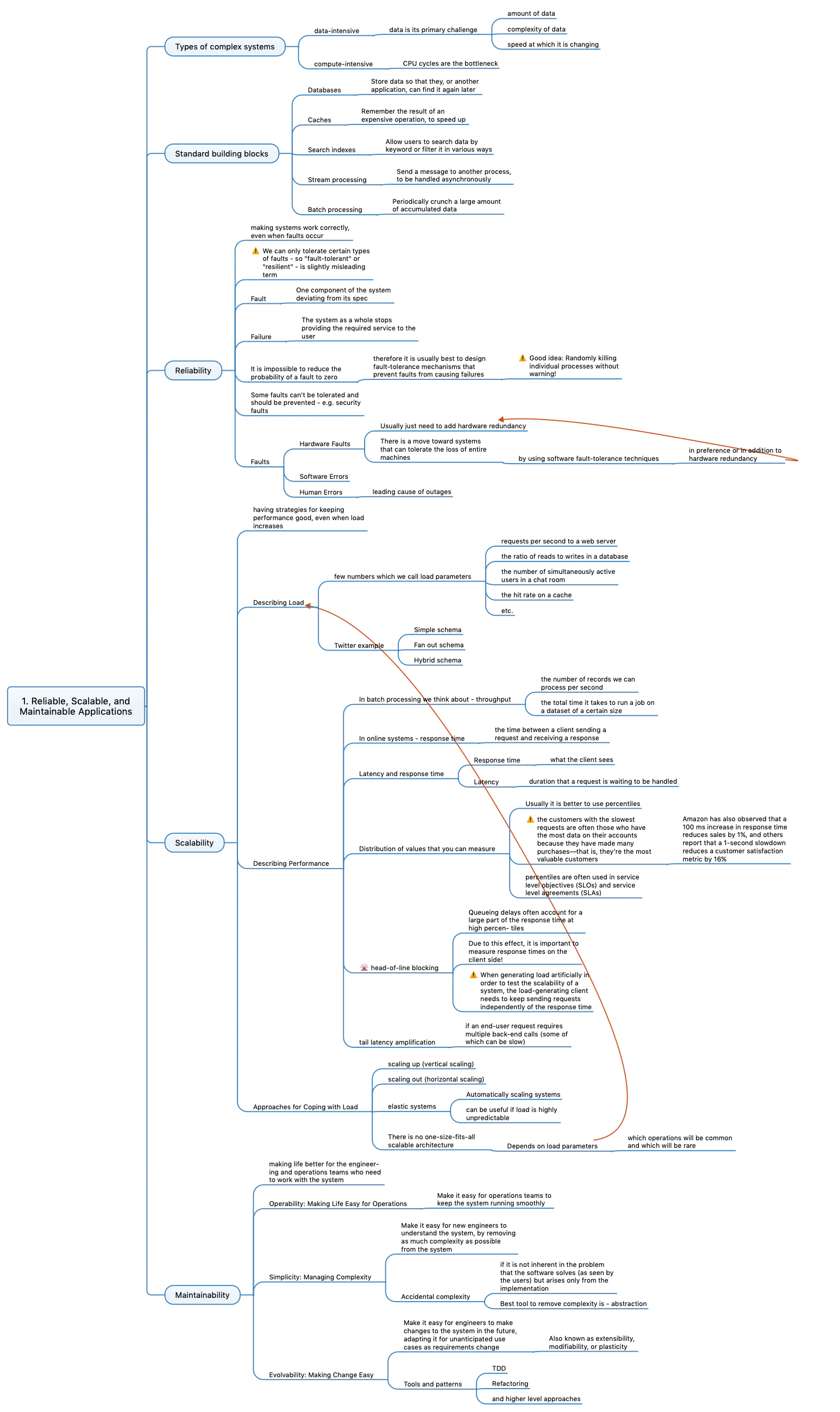
  • Building blocks of the apps
  • What is Reliability, Scalability and Maintainability. Examples and definitions.
    • Faults and Failures
    • Performance, Load, Latency and Response Time
    • Operability, Simplicity, Evolvability
  • Why you should randomly kill your servers 😅
  • How Twitter delivers 12,000 tweets per second to 300,000 readers per second. (VERY interesting!)
  • How much money Amazon loses for each 100ms delay in their response time
  • How to quickly calculate percentiles for monitoring response time in PROD

Download full mind map (PDF)