Serializability

Designing Data-Intensive Applications - Chapter 9 - Consistency and Consensus

Designing Data-Intensive Applications - Chapter 9 - Consistency and Consensus

Translations: RU

Earlier the book club of our company has studied excellent book:

Martin Kleppmann - Designing Data-Intensive Applications

This is the best book I have read about building complex scalable software systems. 💪

As usually I prepared an overview and mind-map.

Chapter 9 tells about Consistency and Consensus in distributed systems. It covers the following topics:

  • What is consistency and eventual consistency
  • Linearizability. Why it is needed. Difference from Serializability. How to implement Linearizability. The cost of Linearizability. CAP theorem.
  • Ordering Guarantees. What is ordering and causality. It’s relation to Linearizability. Sequence Number Ordering and how to implement it. Total Order Broadcast and how to implement it.
  • Distributed Transactions and Consensus. Why we need Consensus and Distributed Transactions. How to implement them, related problems and software that helps.

Summary:
Designing Data-Intensive Applications - Chapter 7 - Transactions

Designing Data-Intensive Applications - Chapter 7 - Transactions

Translations: RU

Earlier the book club of our company has studied excellent book:

Martin Kleppmann - Designing Data-Intensive Applications

This is the best book I have read about building complex scalable software systems. 💪

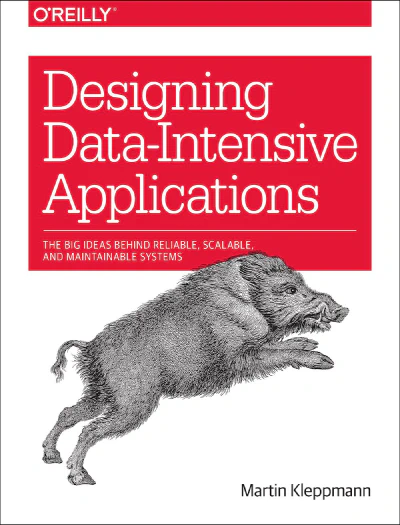
As usually I prepared an overview and mind-map.

Chapter 7 is all your DEV team should know about Transactions:

  • The purpose of transactions
  • The concept of transaction: ACID, BASE, single-object and multi-object transactions
  • Weak Isolation Levels: Read Committed, Snapshot Isolation and Repeatable Read. Problems and preventing them: Lost Updates, Write Skew and Phantoms
  • Serializability and three approaches: Actual Serial Execution, Two-Phase Locking (2PL), Serializable Snapshot Isolation (SSI). Potential problems and performance.

Download full mind map (PDF)