
Home

Communication Genius - Lesson 1 - Communication preparation algorithm

Communication Genius - Lesson 1 - Communication preparation algorithm

Translations: RU

In January 2022, I started the Communication Genius course from one of the best public speaking coaches - to be a bit less toxic and more efficient 🙂

Lesson 1 discovers:

  • What is the purpose of communication?
  • What are the two parts of success?
  • Why should you clearly define and write down your real goal?
  • How to consider your Audience?
  • What is the Format and its elements: Time, Place, Dress Code and Genre and how to use them?
  • How to choose the right Moment? Examples of good and bad moments?

Clean Architecture - PART V - Architecture

Clean Architecture - PART V - Architecture

Translations: RU

The book club of our company has chosen a new wonderful book for reading:

Robert Martin - Clean Architecture - a Craftsman’s Guide to Software Structure and Design

👍

Fifth part of the book contains A LOT of useful information:

What is software architecture? What type of interdependencies can exist? How to draw borderlines between components? What type of borders exist? How to distribute policies by the levels? What are business rules, entities and use cases? What architecture can and should “scream”? Description of Clean Architecture.

Noise - Part II - Your Mind is a Measuring Instrument

Noise - Part II - Your Mind is a Measuring Instrument

Translations: RU

Interesting to learn how your mind makes judgments. Two types of judgments: predictive and evaluative. How to measure errors from bias and noise. How to measure the cost of noise. And how to deal with catastrophic consequences.

Drilling down the noise to three components: system noise, level noise, and pattern noise. How to measure (and compensate) the noises. Occasional noise as a part of pattern noise. How to compensate occasional noise: wisdom-of-crowds effect, crowd-within-the-one effect, second answer effect, and dialectical bootstrapping tool.

How the group work influences the noise. Informational cascade and social pressure cascade. How to deal with them. The effect of group polarization.

Noise - Part I - Finding Noise

Noise - Part I - Finding Noise

Translations: RU

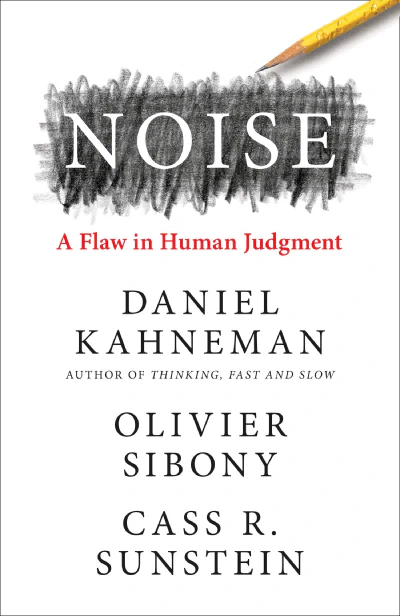
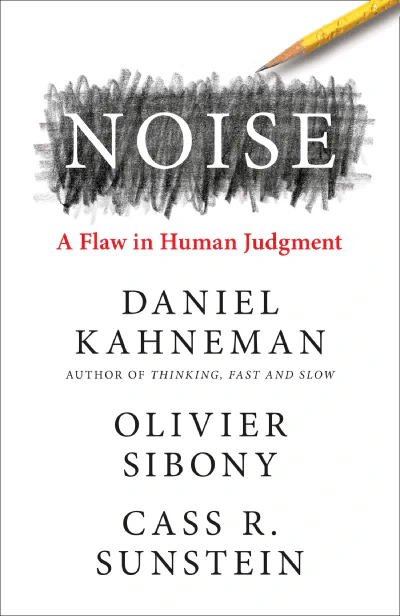
Do you realize how seriously your organization is affected by bad decisions? There are two types of errors in human judgments: Bias and Noise. Bias is a very widely recognized problem, and you definitely heard about it. Noise is not so widely recognized. Yet, it affects MANY decisions in ALL the industries.

There is a huge Noise in government decisions. There is a huge Noise in commercial companies.

Noise can be made visible and can be reduced. It is harder to measure the noise in unique singular decisions, but it is still there and it still can be reduced.

Designing Data-Intensive Applications - Chapter 12 - The Future of Data Systems

Designing Data-Intensive Applications - Chapter 12 - The Future of Data Systems

Translations: RU

Earlier the book club of our company has studied excellent book:

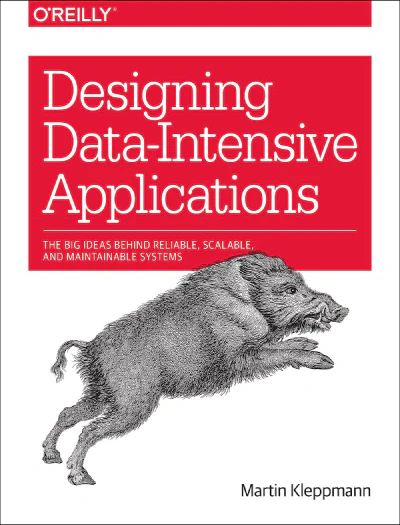
Martin Kleppmann - Designing Data-Intensive Applications

This is the best book I have read about building complex scalable software systems. 💪

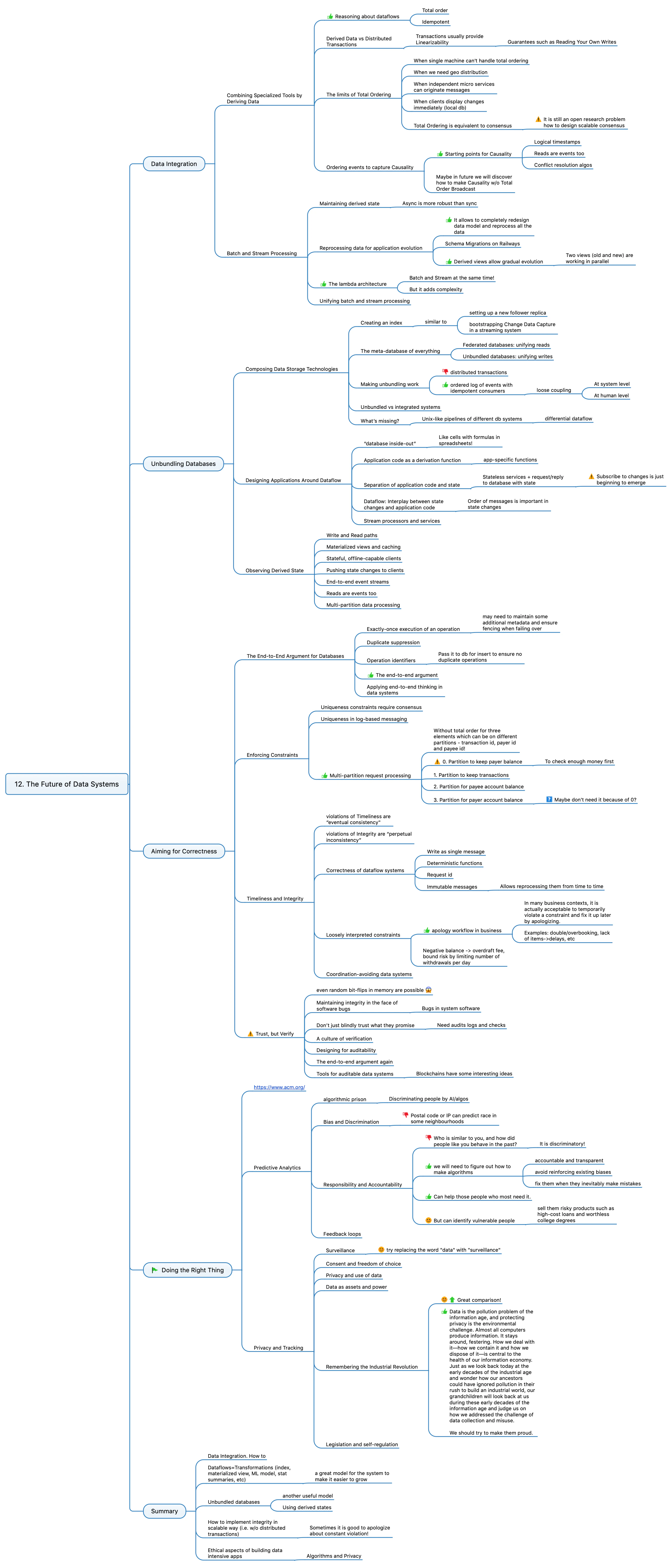
As usually I prepared an overview and mind-map.

Chapter 12 is a summary of the book and a visionary view of the future.

  • Data Integration.
    • Overview of the ways we have to integrate data.
    • Causality and why we need Total Order and Idempotency.
    • Transactions and Linearizability
    • Limitations of Total Order.
    • Lambda architecture and unifying batch and stream processing as the most perspective approach.
  • Unbundling Databases.
    • Overview of composing data storages together.
    • Designing apps around Dataflow.
    • Usage of derived states.
  • Aiming for Correctness: what problems to consider and how to deal with them.
    • End-to-end fencing token.
    • How to process multi-partition requests.
    • Timeliness and Integrity issues. Apology workflow in business.
    • Meta approach: Trust, but Verify.
  • Doing the Right Thing.
    • Predictive Analytics is discriminating people! We have responsibility and accountability here.
    • Privacy is conflicting with Tracking. Total surveillance should be legislated and self-regulated.

Download full mind map (PDF)

Designing Data-Intensive Applications - Chapter 11 - Stream Processing

Designing Data-Intensive Applications - Chapter 11 - Stream Processing

Translations: RU

Earlier the book club of our company has studied excellent book:

Martin Kleppmann - Designing Data-Intensive Applications

This is the best book I have read about building complex scalable software systems. 💪

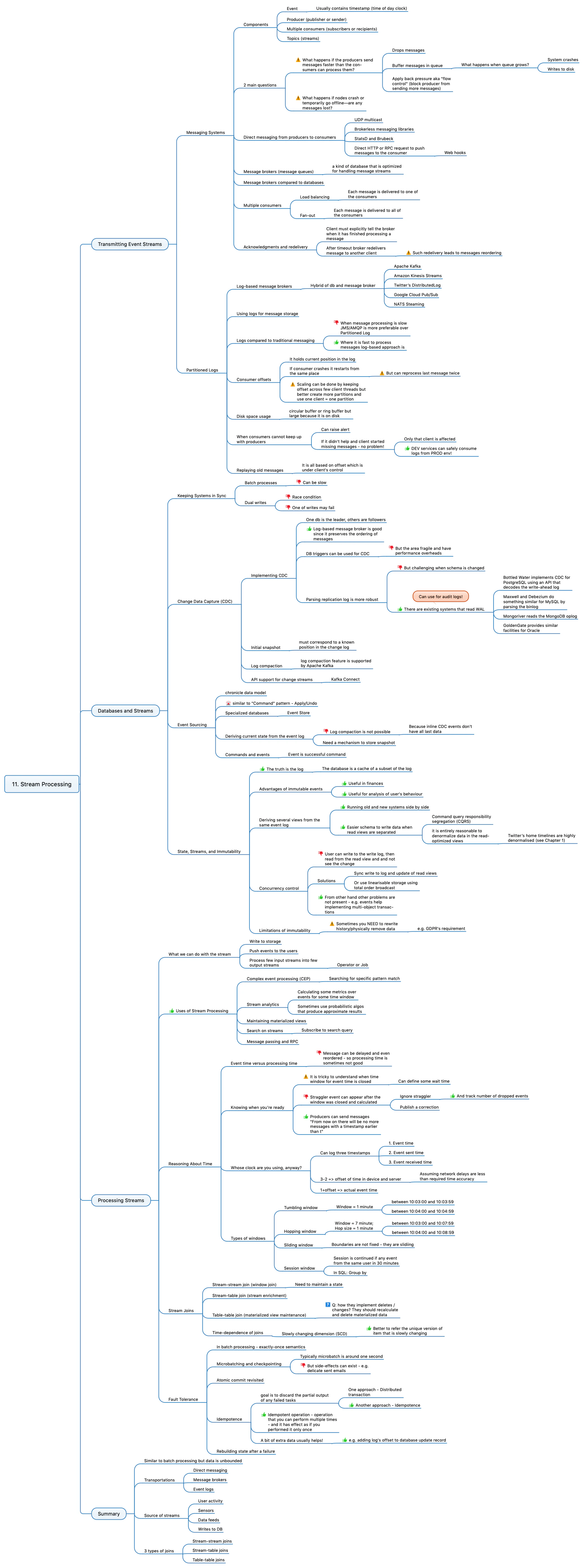
As usually I prepared an overview and mind-map.

Chapter 11 discovers all aspects about Stream Processing. If your system needs to process some data on-the-fly then your DEV team should learn this info.

  • Approaches for transmitting events: Direct messaging, Messaging Systems and Partitioned Logs. Their implementations, pros and cons.
  • How to use Streams for databases. Sync databases, Change Data Capture (CDC), Event Sourcing. State, Streams, and Immutability.
  • Nuances of Processing Streams. Useful use cases, reasoning about Time, 3 types of stream Joins, Fault Tolerance.

Download full mind map (PDF)

Designing Data-Intensive Applications - Chapter 10 - Batch Processing

Designing Data-Intensive Applications - Chapter 10 - Batch Processing

Translations: RU

Earlier the book club of our company has studied excellent book:

Martin Kleppmann - Designing Data-Intensive Applications

This is the best book I have read about building complex scalable software systems. 💪

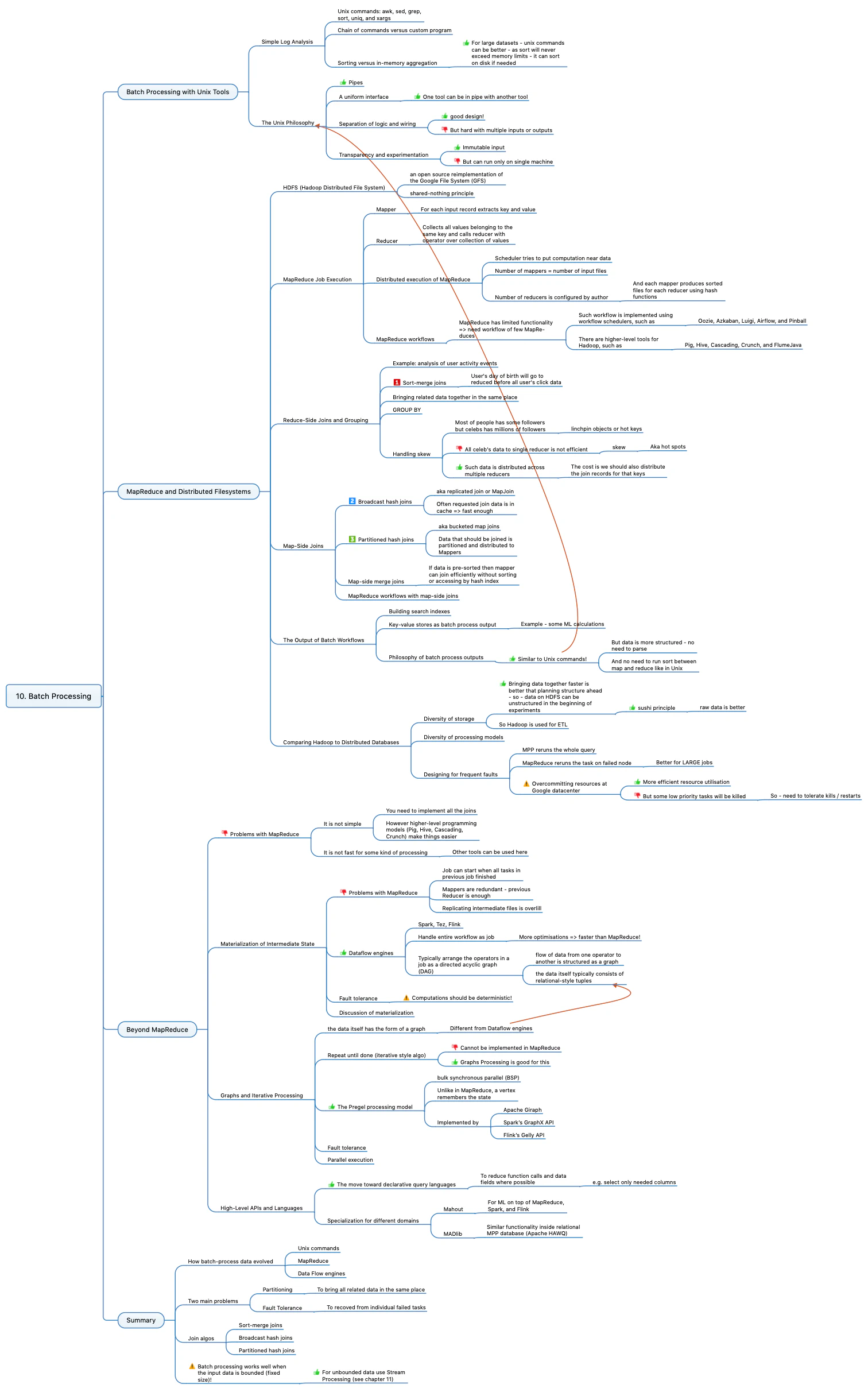
As usually I prepared an overview and mind-map.

Chapter 10 discovers all aspects about big data Batch Processing. If your system needs to process some data then your DEV team should learn this info.

  • Unix tools for batch processing and brilliant concept of pipes.
  • MapReduce and Distribute File Systems. How this approach solves problems of Unix pipes. Fault Tolerance and Partitioning. Usage and implementations of Joins, Grouping, Mapping. Available tools and problems of this approach.
  • What is beyond MapReduce. Dataflow engines, Graph processing, High-level APIs and MPP databases. Dealing with Fault Tolerance and Partitioning. Implementations, problems, what to use and when.

Download full mind map (PDF)

Designing Data-Intensive Applications - Chapter 9 - Consistency and Consensus

Designing Data-Intensive Applications - Chapter 9 - Consistency and Consensus

Translations: RU

Earlier the book club of our company has studied excellent book:

Martin Kleppmann - Designing Data-Intensive Applications

This is the best book I have read about building complex scalable software systems. 💪

As usually I prepared an overview and mind-map.

Chapter 9 tells about Consistency and Consensus in distributed systems. It covers the following topics:

  • What is consistency and eventual consistency
  • Linearizability. Why it is needed. Difference from Serializability. How to implement Linearizability. The cost of Linearizability. CAP theorem.
  • Ordering Guarantees. What is ordering and causality. It’s relation to Linearizability. Sequence Number Ordering and how to implement it. Total Order Broadcast and how to implement it.
  • Distributed Transactions and Consensus. Why we need Consensus and Distributed Transactions. How to implement them, related problems and software that helps.

Summary:

Designing Data-Intensive Applications - Chapter 8 - The Trouble with Distributed Systems

Designing Data-Intensive Applications - Chapter 8 - The Trouble with Distributed Systems

Translations: RU

Earlier the book club of our company has studied excellent book:

Martin Kleppmann - Designing Data-Intensive Applications

This is the best book I have read about building complex scalable software systems. 💪

As usually I prepared an overview and mind-map.

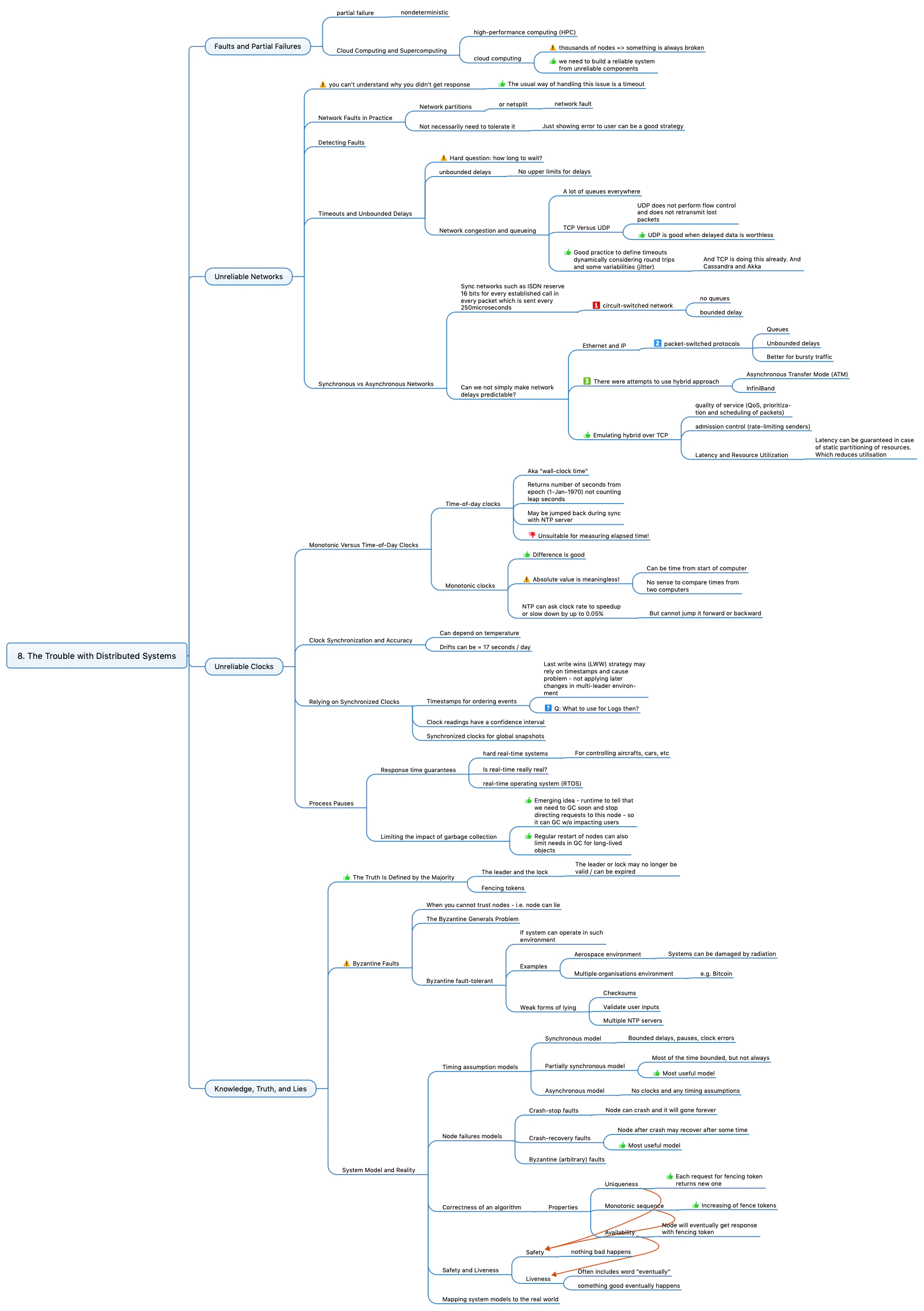
Chapter 8 discovers non-database related problems of distributed systems. DEV teams should consider them when designing distributed software.

  • Faults and Partial Failures. The need to build a reliable system from unreliable components.
  • Problem 1: Unreliable Networks. Why they happen. How to detect them. How to deal with them. Synchronous and Asynchronous networks. Hybrid networks and emulating hybrid networks.
  • Problem 2: Unreliable Clocks. Monotonic Clocks vs Time-of-Day Clocks. What to use and what not to use in different cases. Good practices.
  • Problem 3: Knowledge, Truth, and Lies. What is Truth in distributed systems. The Byzantine Generals Problem. System Model and Reality: what to use for what cases.

Download full mind map (PDF)

Designing Data-Intensive Applications - Chapter 7 - Transactions

Designing Data-Intensive Applications - Chapter 7 - Transactions

Translations: RU

Earlier the book club of our company has studied excellent book:

Martin Kleppmann - Designing Data-Intensive Applications

This is the best book I have read about building complex scalable software systems. 💪

As usually I prepared an overview and mind-map.

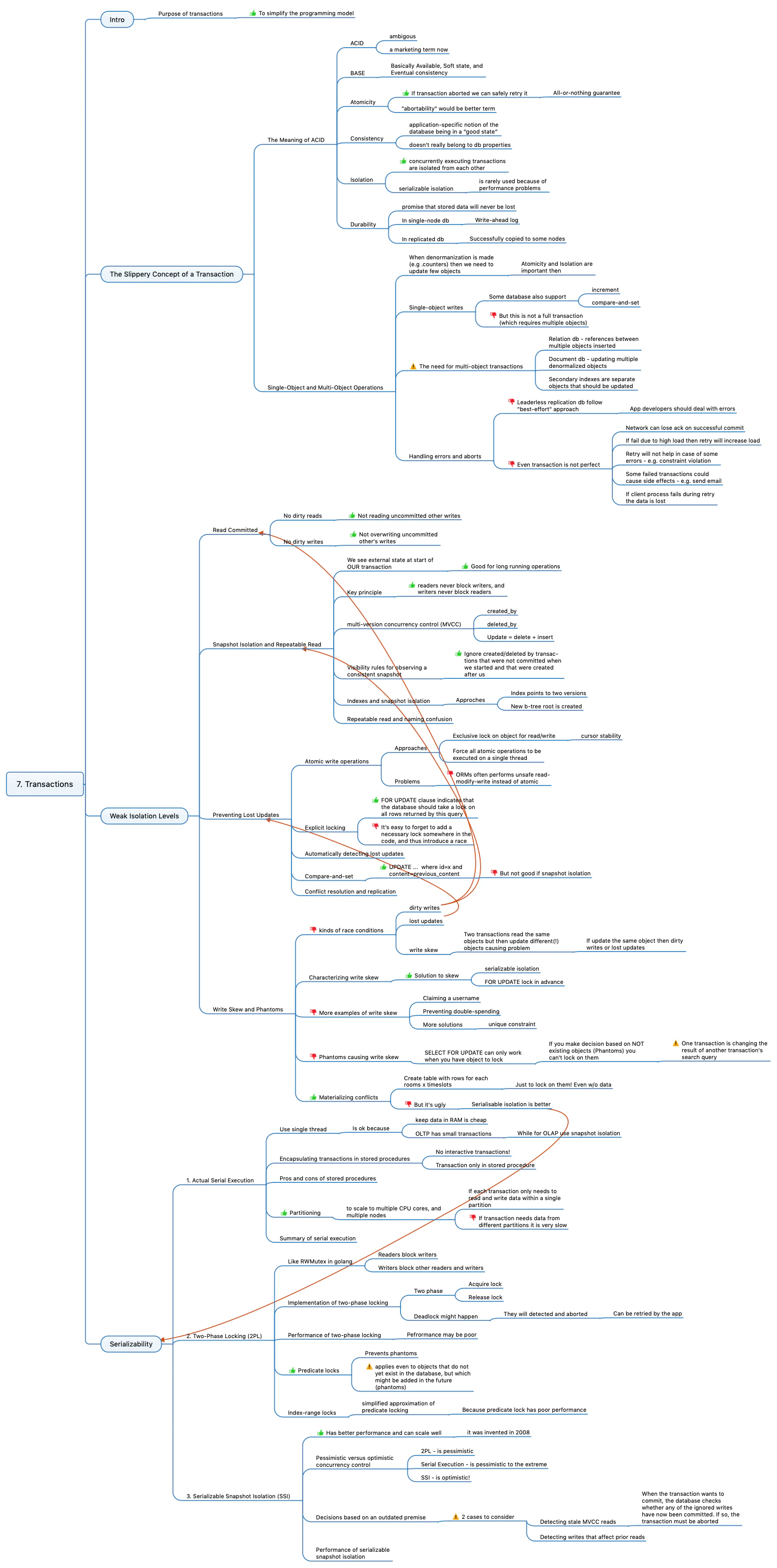
Chapter 7 is all your DEV team should know about Transactions:

  • The purpose of transactions
  • The concept of transaction: ACID, BASE, single-object and multi-object transactions
  • Weak Isolation Levels: Read Committed, Snapshot Isolation and Repeatable Read. Problems and preventing them: Lost Updates, Write Skew and Phantoms
  • Serializability and three approaches: Actual Serial Execution, Two-Phase Locking (2PL), Serializable Snapshot Isolation (SSI). Potential problems and performance.

Download full mind map (PDF)